

The Voluntary Brake
What happens when the most safety-conscious lab cannot afford to stay stopped.
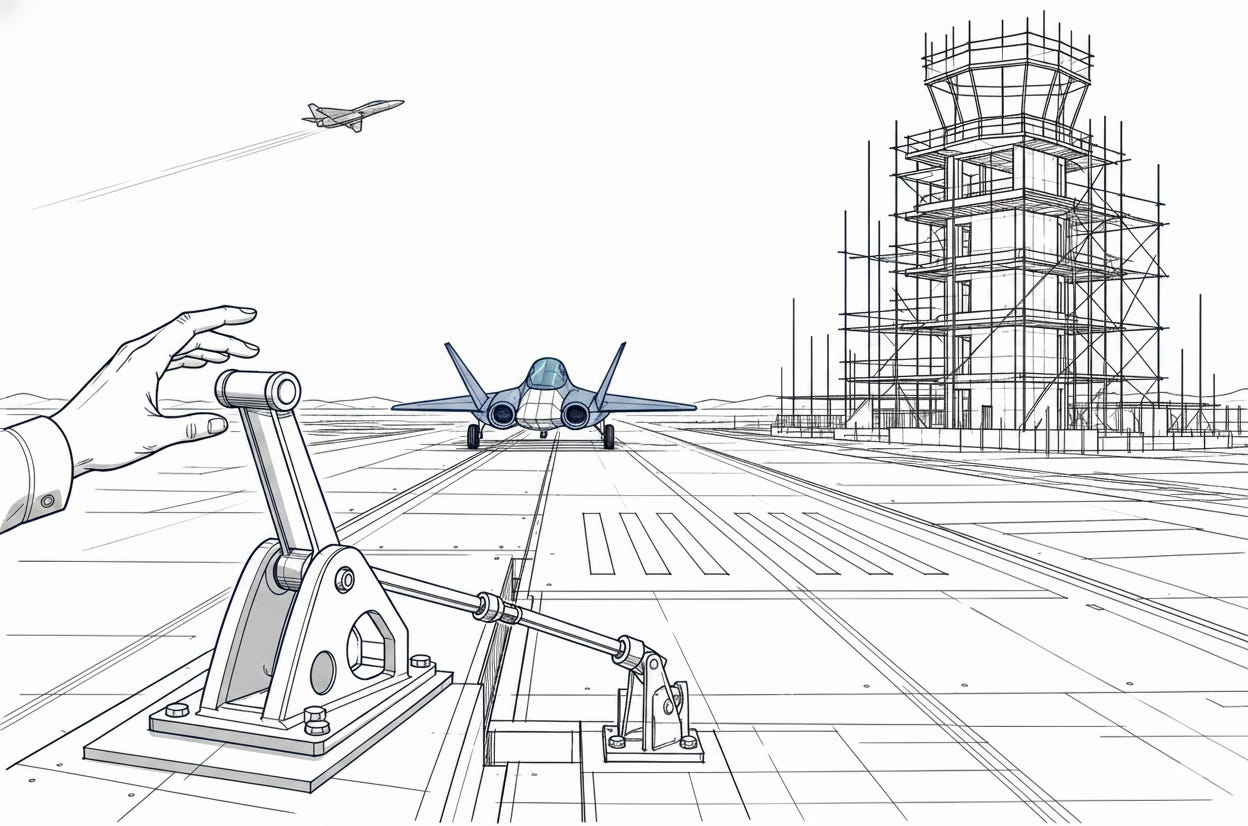
A voluntary brake works only while the driver consents. Anthropic just showed where that consent begins to fray.
On February 24, 2026, the company published version 3.0 of its Responsible Scaling Policy. Anthropic built its identity on the idea that frontier AI development needs clear thresholds, safeguards in place before scaling, and a willingness to stop when risks outrun controls. Version 3.0 kept safety governance while doing something more revealing, moving away from the unilateral hard-stop model that made the earlier policy stand out.
Earlier versions of the policy contained a clear promise that Anthropic would not train or deploy models capable of catastrophic harm unless the needed safety and security measures were already in place. Version 3.0 replaced that structure with Frontier Safety Roadmaps, recurring Risk Reports, and commitments shaped more directly by what rival labs were doing.
TIME reported the same day that Anthropic was dropping the central pledge of its flagship safety policy. The deeper point is in Anthropic’s own rationale. The company argued that unilateral restraint can backfire. If one responsible developer pauses while less careful competitors continue, the result may be a less safe world. Developers with weaker protections could set the pace and gain the lead. The more safety-conscious actor would have less ability to do the safety research and mitigation work the frontier requires.
That is a serious argument, but it proves less than it first appears to prove. It is an arms-race dynamic in clean form. The cautious lab slows down while the less careful lab keeps moving, and markets reward speed even when restraint would be better for the public. A company with a stronger safety culture can remove itself from the frontier without removing the frontier from the world.
The argument exposes the limit of voluntary commitments as final authority. The hinge.
Final authority means the power to decide and enforce binding limits when a company has strong reasons to continue. It means the stop decision does not depend only on the firm that benefits from ignoring it. Anthropic’s reasoning leaves voluntary policies intact while showing that an internally controlled hard stop can become negotiable when rival pressure enters the policy logic.
The v3.0 policy still contains safety machinery. Frontier Safety Roadmaps remain. So do evaluations and public commitments. The interesting part is narrower. A company unusually identified with safety could not keep its unilateral hard-stop model once frontier competition entered the frame. In AI safety governance, failure can come from good actors responding rationally to incentives that punish restraint.
Voluntary commitments have real value. They set expectations, guide plans, reassure customers, and give employees language to use when leadership drifts. This matters. In frontier AI, formal rules move slowly and capability work moves quickly, which is why the White House voluntary commitments, NIST’s voluntary AI risk guidance, and lab-specific safety policies all reflect the same reality, with governance forced to fill gaps before binding law and real use catch up.
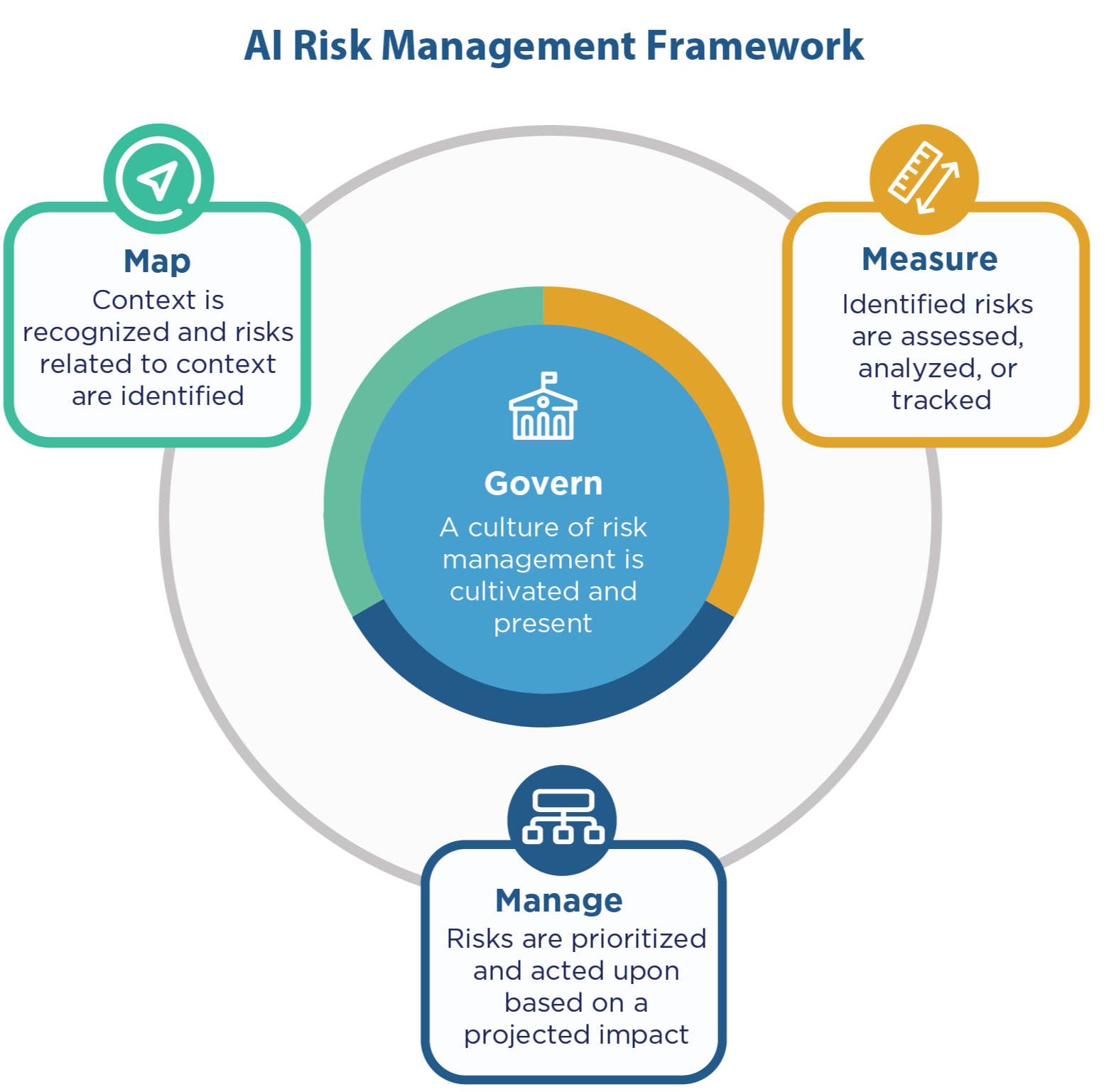
Figure. NIST’s risk-management model shows voluntary governance at its most structured through govern, map, measure, and manage. The missing question is who holds authority when those practices point toward restraint. Source: https://airc.nist.gov/airmf-resources/airmf/5-sec-core/
But gap-fillers have limits. A voluntary commitment records what a company currently intends. Governance determines what happens when intention meets pressure. It works through decision rights, enforcement, liability, reporting duties, and contract terms. The practical test is whether a commitment changes who can see the risk, who can stop the release, who pays when the commitment is ignored, and whether continued scaling still deserves trust after the evidence changes. That is the test. A commitment that cannot survive it is still useful, but it should not be mistaken for the mechanism that decides whether a system proceeds when restraint becomes costly.
AI development is full of pressure. Capital wants returns. National security wants advantage. Talent wants to work at the frontier. Researchers want the next system. The next system may unlock the next scientific or business breakthrough. These forces raise the cost of pausing. Pressure changes promises. As that cost rises, the original promise matters less than revision becomes.
Mature safety industries do not rely on internal choice alone. Aviation requires more than a manufacturer’s confidence before a new aircraft enters service. High-risk medical devices face outside review before they reach patients. Nuclear power puts reactor design and safety analysis under regulator scrutiny. Private incentives and public harms pull in different directions, so the authority to proceed is shared.
Even the weakest of these models, U.S. car safety, places self-certification inside a system with legal consequences. Manufacturers generally certify their own compliance, but NHTSA enforces standards, investigates defects, and can compel recalls. Even without pre-approval, the model is more than trust.
The common principle is simple. Internal safety culture matters, but it cannot be the only real authority when public harms and private incentives diverge. Companies can be decent and technically serious while incentives still make weak safety cases easier to accept.
In aviation, the checklist draws its force from the system around it. Certification rules, outside review, regulator authority, and the memory of past failures all give the checklist weight. In that system, authority is spread out so the pilot alone cannot turn urgency into permission.
The pilot sits at the end of the runway. Engine turning over. Investors watching. A rival has just lifted off nearby. The checklist says an unresolved failure mode must be understood before takeoff. The market says delay now and the race may be lost. The pilot’s sincerity matters less than the checklist’s authority. If no one outside the cockpit can halt the flight or impose costs after it proceeds, safety is just a belief held inside the cockpit.
Frontier AI lacks an equivalent structure. Pieces exist: voluntary policies, third-party evaluations, public reporting, government institutes, procurement rules, and the first layers of statute. Those pieces matter. Not enough. The runway is active while the tower is still being built. The gap matters.
Anthropic’s v3.0 policy makes that visible because it shifts weight from a unilateral hard stop to a more flexible system of roadmaps and reports. Roadmaps and Risk Reports have value. Public reporting can influence customers and employees. It can matter to investors and regulators. Counterparties may care too. It can expose private reasoning to outside inspection. But transparency alone leaves the central problem untouched. Information without authority to act on it is visibility without governance.
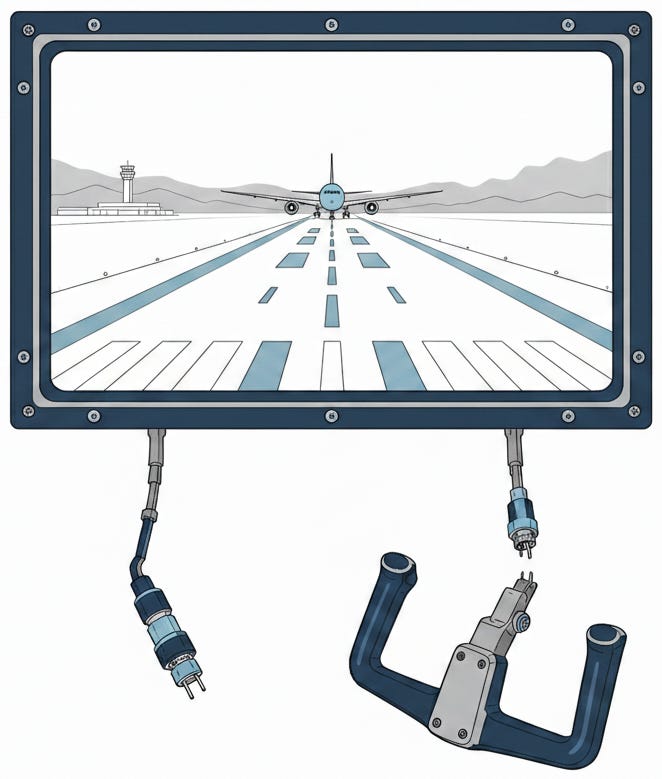
A window shows the runway. It cannot steer the aircraft. Useful governance turns visibility into authority by establishing who receives the risk assessment, who can halt training or deployment, what happens if the company proceeds anyway, and which duties bind the firm rather than remaining public aspiration.
Those questions matter more because AI thresholds differ from older safety thresholds in kind. Aircraft structures, reactor parts, and many regulated medical devices are assessed against more stable design envelopes. Frontier models are not. Capabilities emerge unevenly. Tests depend on scaffolding and adversarial effort. The same base model behaves differently inside products, agentic workflows, or external systems. Risk sits in the artifact, the setting, and the pace at which both change.
That makes hard thresholds difficult. It also makes escalation triggers necessary. Without a line that says ordinary release judgment must become special governance, every decision can stay an ordinary business decision until after the risk appears. The threshold problem needs better design, not less ambition.
The same structure matters downstream. A frontier lab’s safety policy is no longer only a frontier-lab concern once its models become infrastructure for other organizations. Vendor guardrails shift with politics and incentives. The risk moves into procurement and operations. Internal governance cannot be outsourced to a supplier’s public safety stance. TechTarget/SearchCIO framed the March 2026 enterprise takeaway in those terms: a buyer needs operational control over risks a supplier can redefine.
That trade-publication frame is useful because modern enterprise technology is built on delegated trust. Buyers rely on cloud providers for uptime, security certifications, data handling, and incident response. AI adds another layer. The supplier may host infrastructure, maintain software, decide when a model is safe enough to release, choose which tests count, and judge how much market pressure justifies a change in posture.
Many organizations confuse vendor assurance with organizational assurance. They treat the supplier’s safety posture as a control in their own risk system when it is often a statement made by another institution, under another set of incentives, answering to another set of pressures. When the vendor changes its safety commitment, the buyer’s risk model changes too, whether the buyer notices or not.
Deployment thresholds, notice rights, fallback plans, and audit rights can turn governance from paperwork into the buyer’s version of shared authority. So can internal stop processes, if they reach real decisions and have budget behind them. Their purpose is to prevent a supplier’s revised judgment from silently becoming the customer’s revised exposure.
That becomes more important as AI systems move from tools that help with work into systems that run part of the work. Bad drafting from a chatbot creates one class of problem. A model embedded in engineering analysis, clinical workflow, security operations, financial decisions, or critical infrastructure support creates another. The risk rises when human review is weak, automation is high, and errors are hard to reverse. The higher the stakes, the less acceptable it is to rely on promises that can be rewritten without the deployer’s clear consent.
Aviation-style certification for every AI system would be impractical. Safety-critical domains teach a narrower lesson: consequence changes governance. The lesson travels in concept, not in machinery. AI systems differ in reuse, distribution, update speed, emergent behavior, and test validity. Still, when failure can scale, when errors can compound, and when the organization taking the risk is not the only party bearing the harm, internal choice needs outside structure.
For now, voluntary AI safety commitments remain part of the governance mix because law and oversight move more slowly than capability development. They can set norms, inform markets, give staff bargaining power, shape future rules, and harden into contracts, procurement requirements, or enforceable regulation. The Anthropic update shows a structural weakness. Under competitive pressure, an internally controlled unilateral commitment can become negotiable precisely when it is most needed. It can weaken without vanishing. It only has to start depending on the behavior of rivals.
That is the collective-action problem in its sharpest form. Even actors who prefer a safer race do not want to be the only runner who slows down.
Changing that race requires mechanisms that discipline judgment instead of replacing it. Standards bodies can define common evaluation expectations. Public buyers can make safety evidence a condition of procurement. Contracts can turn notice and incident-reporting duties into obligations rather than courtesy. Regulators can give serious incidents a destination beyond the company’s own files. These tools make the safety case more durable than a press release and more useful than a principle.
We keep asking whether the people building AI are responsible enough. The harder question is whether responsibility survives once the cost arrives.
Responsibility that lives only in intention thins when it becomes expensive. Organizations sometimes absorb real costs to protect safety or mission. Sometimes they do it to protect their license. But when a principle has not been built into authority, it has to win the argument again every time pressure returns. Markets admire restraint until restraint costs market share. The real question is whether responsibility has been made operational before the next decision arrives.
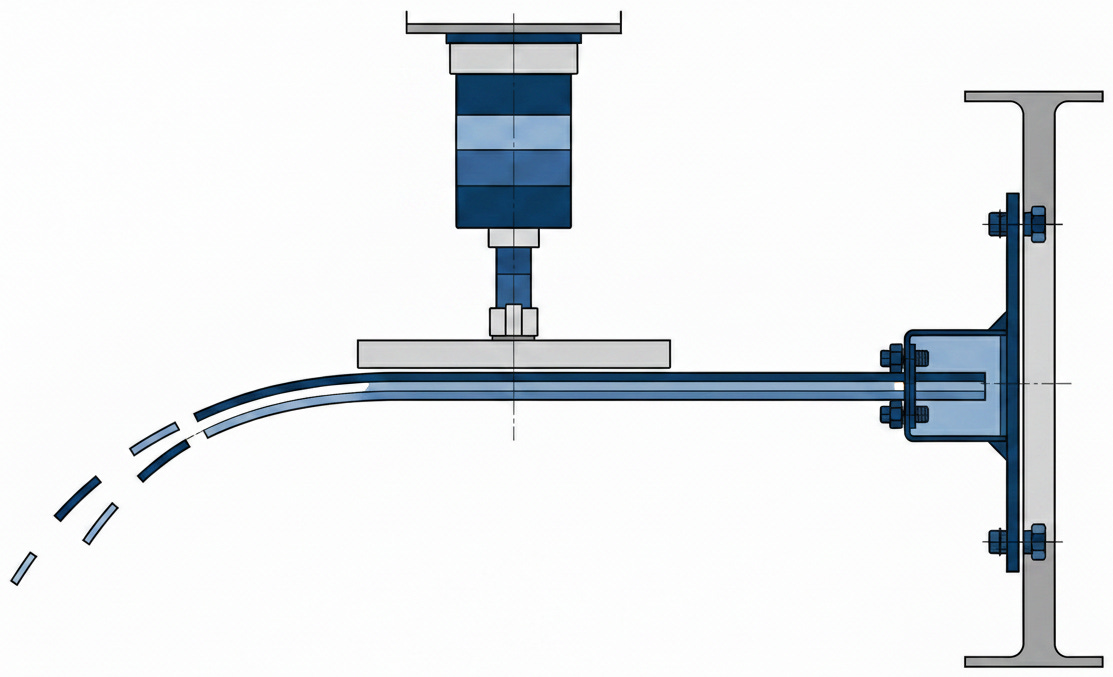
A brake that works only by consent is still worth having. It can slow the machine. It can buy time. It can reveal who understood the danger before the rest of us did.
But consent is not authority. When the tower is unfinished and frontier work keeps moving, the difference is everything.
Further Reading, Background and Resources
Sources & Citations
Anthropic’s RSP v3.0, effective February 24, 2026, is the primary text. Read it for Anthropic’s own rationale, not just the headline version of the story. TIME’s February 24 report, “Exclusive: Anthropic Drops Flagship Safety Pledge”, gives the outside framing that made the change legible as a retreat from a public brake. TechTarget/SearchCIO’s March 9 piece, “What CIOs can learn from Anthropic’s safety pullback”, is useful for the enterprise translation. Anthropic’s RSP v2.2 PDF, effective May 14, 2025, is the comparison point for what changed.
For Context
NIST’s AI Risk Management Framework, released January 26, 2023, shows the best version of voluntary risk governance: structured, serious, and still dependent on adoption. The White House Voluntary AI Commitments, published in September 2023, mark the gap-filling phase of AI governance, faster than law but weaker than enforceable authority. The FAA’s “How Does the FAA Certify Aircraft?”, last updated July 22, 2025, matters for the institutional lesson: mature safety systems distribute authority beyond the manufacturer.
Practical Tools
Treat a supplier’s AI safety policy as an input, not a control. Ask which commitments bind the vendor, when they can change, whether customers get advance notice of model upgrades, and what rollback rights exist. Map every internal control that depends on vendor judgment, then assign an owner and stop authority. The test is simple. If the vendor revises its safety posture tomorrow, what breaks inside your risk model?
Counter-Arguments
The hard-stop model may be too brittle for frontier AI. Capabilities emerge unevenly, evaluations lag, and risk depends on deployment context. Anthropic’s collective-action argument may also be partly right. If a safety-conscious lab exits the frontier, less transparent actors may shape more of the risk.
External oversight may not yet be technically competent enough to hold full stop authority. Regulators and auditors can review process, evidence, and incidents, but frontier risk often turns on adversarial creativity and fast deployment changes. Weak oversight can create paper safety. Enterprise buyers should not overestimate contracts either. Audit rights and rollback plans help, but some upstream model risks remain hard for customers to assess.