

The Great Unbundling of Creative Work
What automation makes cheap—and what it makes priceless
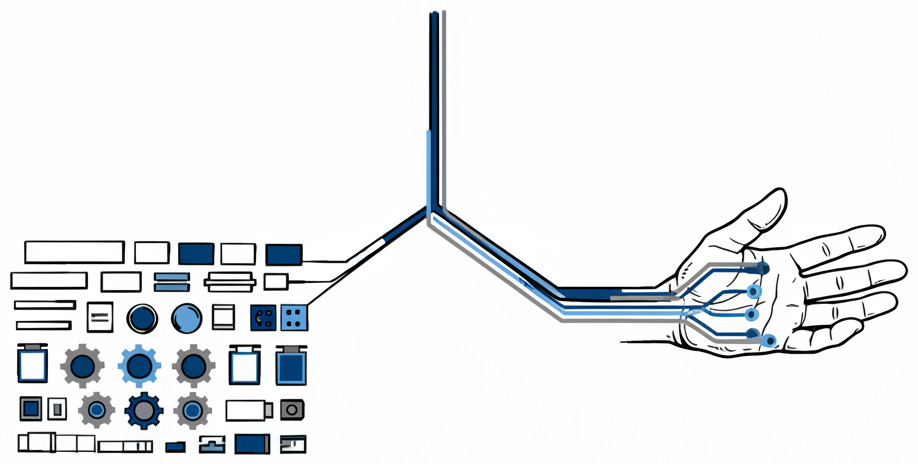
We assume automation adds value. It does not. Automation subtracts the middle and amplifies the ends. We are witnessing the separation of production from meaning. What can be automated from what derives its value precisely because it cannot be.
Every time a technology automates production, it destroys the value of craft and raises the price of conviction. Photography did not kill painting; it killed the need for likeness. The printing press did not eliminate writers; it eliminated scribes. The pattern is structural. Automation makes execution cheap. It makes meaning expensive.
The adoption numbers are noise. By 2023, 94% of U.S. content creators reported using AI tools (Influencer Marketing Factory). The adoption curve has only steepened since. But the volume of usage obscures the direction of flow. What matters is which parts of the workflow they are handing over.
The logic is consistent across industries. Automation eats assembly first: combining existing elements according to known patterns. Product descriptions. First-pass edits. Stock illustrations. Background music. These tasks share a trait: competent execution matters more than distinctive vision. Skill without taste. Craft without voice. This is the commodity zone, and AI owns it.
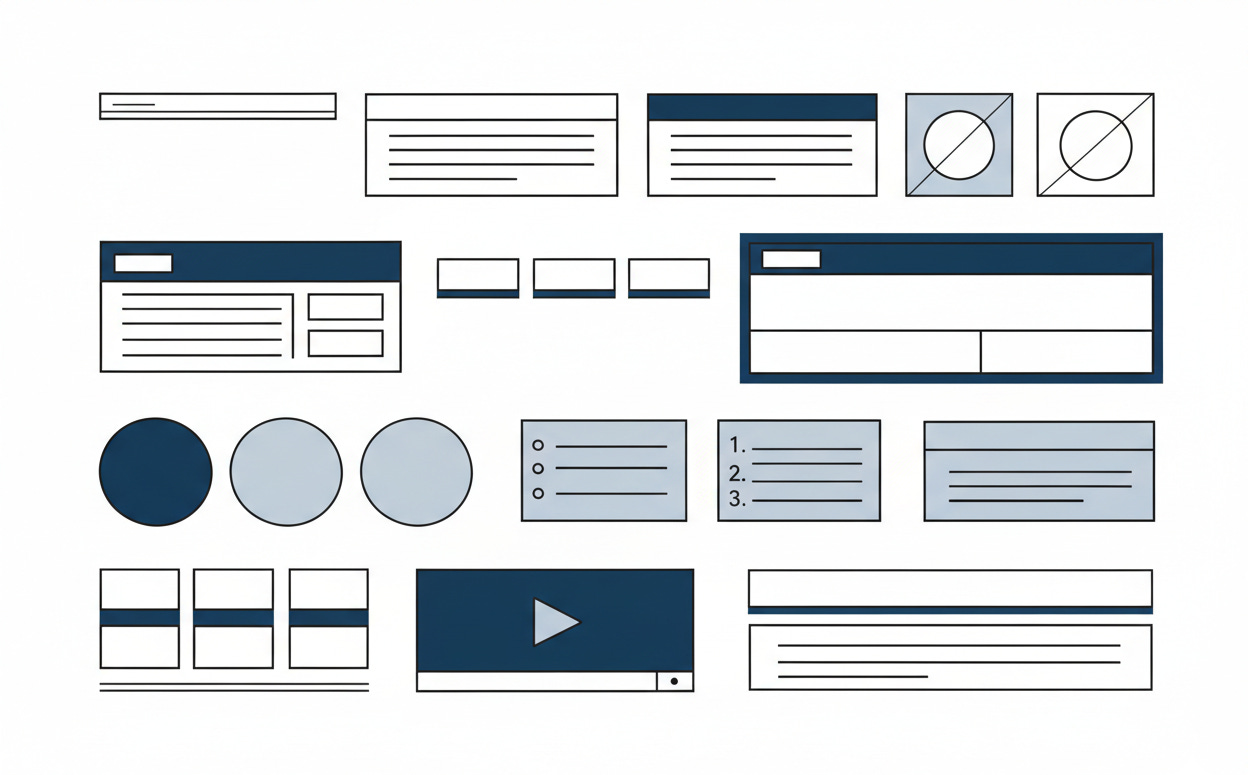
Automation meets resistance only where value derives from origin. The essay that matters because a specific person wrote it. The artwork collectors want because a specific hand touched it. The video that resonates because it carries someone’s actual perspective. The newsletter trusted for the judgment behind it. The common thread is authenticity built into the work itself, inseparable from who made it.
This defines the authenticity gradient. At one pole sit purely functional tasks: “good enough” is the standard, speed is the metric, and AI wins permanently. At the other pole sit works whose value is inseparable from human origin. Here, AI cannot compete, no matter how technically proficient it becomes. A machine can generate a competent blog post. It cannot generate a reputation, a track record, or a body of work that carries the weight of a human life behind it.
Most creative work exists between these poles. That is where the collapse is happening.

The label “content writer” once encompassed everyone from SEO churners to distinctive voice writers. One title, radically different positions on the gradient. AI has made this bundling untenable. Organizations are discovering they need far fewer writers for commodity content. AI handles that adequately. But the writers they retain must offer genuine distinction. The demand has not disappeared. It has concentrated. The middle has collapsed.
The same unbundling is happening to designers, to musicians, to video producers. Anywhere a job title bundles commodity work with distinctive work, AI forces separation. The “graphic designer” who spent half their time on routine layouts and half on brand identity work finds the first half automated. The remaining work commands higher rates, but there is less of it, and it requires more.
This explains the apparent paradox in creative employment data. Headlines alternate between “AI is killing creative jobs” and “demand for creative talent surges.” Both are true, for different segments of the work. Routine production is disappearing. Distinctive creation is more valuable than ever. The aggregate statistics wash out a tectonic shift.
The legal landscape reinforces the separation. Courts are wrestling with whether purely AI-generated works deserve protection. The emerging consensus is simple: they do not. Copyright exists to incentivize human creativity. If the work requires no human authorship, the law sees nothing to protect. This creates a structural advantage for creators who can demonstrate genuine human involvement throughout the creative arc, from conception through execution. The flood of AI-generated content makes human-originated work more legally defensible. Scarcity creates value in the market; provenance creates protection in the courts. Provenance is becoming a defensive asset.
This matters beyond courtrooms. Copyright offers more than information to protect; it offers a marker of origin. And that marker is becoming a competitive advantage.

Journalism is undergoing the same inversion. Wire services use AI for earnings reports and sports scores. Structured data into readable prose. Meanwhile, investigative journalists and distinctive columnists command premium subscriptions. The readers who pay are not paying for summaries they could get anywhere. They are paying for journalists whose bylines carry weight, whose judgment they trust, whose perspective no algorithm can replicate. The machine can summarize what happened. The columnist explains what it means.
Apply the Replaceability Test: If the audience discovered AI made this, would they care?
For the product description, the stock image, the background music, the answer is no. For the opinion piece, the distinctive illustration, the personal essay, the answer is yes. These are becoming valuable precisely because automation makes them scarce.
The distinction clarifies the strategy. Should AI generate product images? Yes. No one cares who composed the background for an e-commerce listing. Should AI write the first draft of a blog post? It depends on whether readers come for information or perspective. If readers subscribe for voice, the newsletter cannot be AI-drafted. Not unless it serves only as scaffolding that gets completely transformed. The authenticity gradient is structural, not moral. Human involvement adds value exactly where origin is what makes the work matter.
The coming years will finish what the last few started: the complete unbundling of commodity production from distinctive creation. Every improvement in AI pushes more tasks below the threshold of human relevance. But the same improvements raise the premium on everything above it. This is not a temporary disruption. It is a permanent restructuring of how creative value is created and captured.
The photographers who survived the smartphone revolution did not compete on access; they moved upmarket into work that required judgment, not just technical facility. The strategy now is identical. Move toward the authenticity pole. Build a reputation. Develop a voice. Create work that derives its value from the fact that you, specifically, made it.
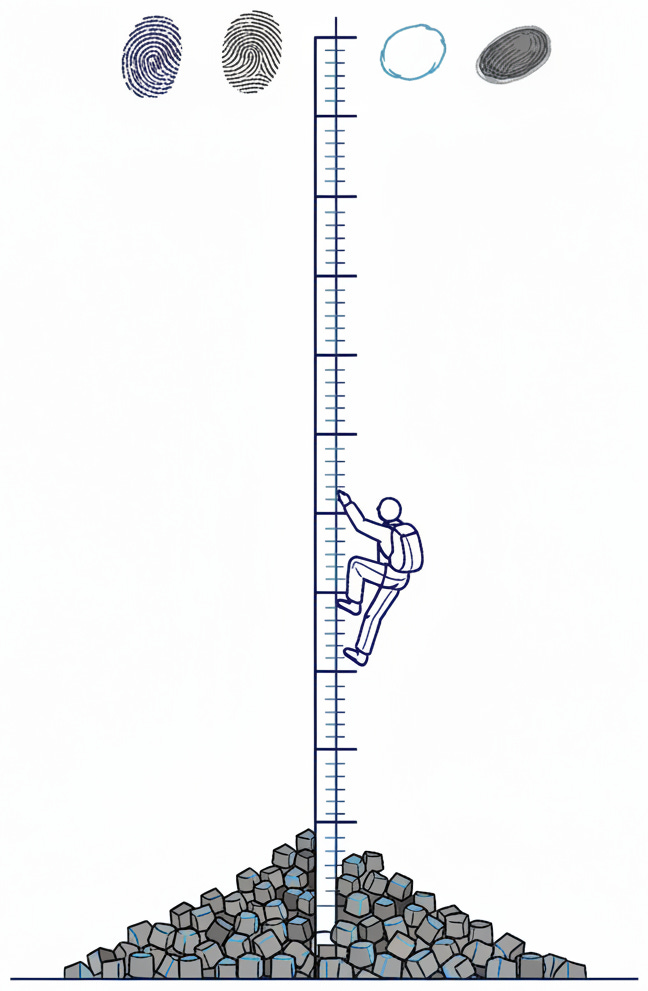
The technology that makes content cheap makes conviction expensive.
The distinction is not between human and machine. It is between what can be systematized and what must be decided. Everything that can be automated will be. Everything that cannot will become the only thing that matters.
Further Reading, Background and Resources
Sources & Citations
UBS/Reuters: ChatGPT Sets Record for Fastest-Growing User Base (February 2023) - The UBS analysts’ note that documented ChatGPT hitting 100 million users in two months remains the definitive source for this milestone. When investment banks reach for superlatives, the underlying shift is real.
Influencer Marketing Factory: Creator AI Adoption Survey (May 2023) - The source for the 94% adoption figure. A survey of 660 creators found near-universal AI tool adoption. Worth noting the limitations: self-reported data from a relatively small sample.
Getty Images v. Stability AI Lawsuit (February 2023) - The legal filings reveal where battle lines are being drawn: approximately 12.3 million visual assets used without license. The fact that AI-generated images occasionally reproduced Getty watermarks is the kind of detail that makes lawyers salivate.
David Autor: Work of the Past, Work of the Future (May 2019) - The MIT economist’s research on labor market polarization provides the theoretical backbone for understanding creative work unbundling.
For Context
Brookings: Hollywood Writers’ Victory Matters for All Workers (2023) - The 2023 WGA and SAG-AFTRA strikes drew hard lines: AI cannot receive writing credit; actors must consent to digital replicas. Whether other industries develop similar leverage remains the open question.
Practical Tools
The Replaceability Test Framework
Before deploying AI on any creative task, ask: If the audience discovered AI made this, would they care?
Task TypeReplaceabilityAI RoleProduct descriptionsHighFull automationStock imagery/backgroundsHighFull automationFirst drafts (information-focused)MediumScaffolding onlyOpinion/editorial contentVery LowHuman authorship required
Counter-Arguments
“The authenticity premium is temporary.” GPT-4 already mimics individual writers well enough to fool casual readers. If distinctive voice is just a learnable pattern, the authenticity gradient collapses into a race against capability curves. The counter: even if AI can simulate a voice, it cannot simulate the lived experience behind it.
“Most creative work was never about authenticity.” Fair point. Most creative employment historically consisted of competent execution rather than distinctive vision. The unbundling described here might mean fewer creative jobs overall, not a migration toward authenticity work.
“Audiences can’t actually tell the difference.” Studies show human evaluators perform only slightly better than chance at distinguishing GPT-4 text from human writing. The protection isn’t the quality difference; it’s the disclosure norm.